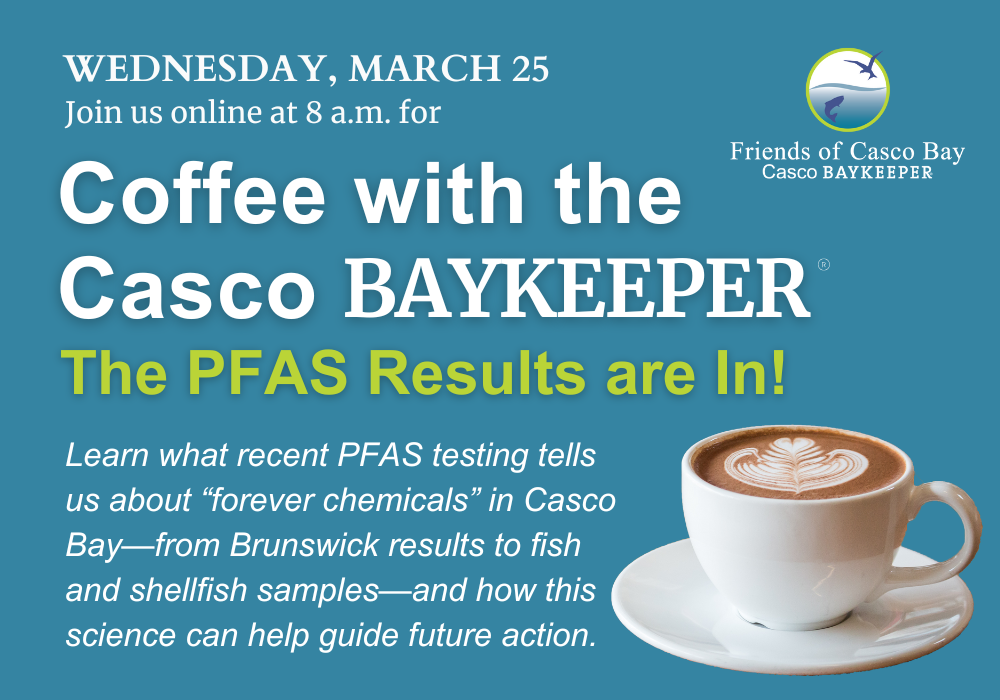
Join us for a morning conversation unpacking what recent PFAS testing tells us about Casco Bay—and what those results might mean moving forward.
Casco Baykeeper Ivy Frignoca will be joined by Christoph Aeppli, Ph.D., Senior Research Scientist at Bigelow Laboratory for Ocean Sciences; Jim Stahlnecker, a biologist with the Maine Department of Environmental Protection; and Heather Kenyon, Friends of Casco Bay’s Science and Advocacy Associate for a practical discussion of new PFAS data from across Casco Bay and the lower watershed, including results connected to the Brunswick spill.
PFAS—often called “forever chemicals”—are long-lasting pollutants that can build up in water, wildlife, and people, raising concerns for environmental and human health.
In this conversation, Ivy and the panel will talk about the completed study and how the results compare to EPA criteria and limits used in other states. They’ll look at state PFAS data from fish and shellfish in Casco Bay. They’ll also discuss potential sources and next steps in Maine.
Please join us with your favorite hot beverage as we explore the evolving science of PFAS and what it means for Casco Bay. We’ll leave time for your questions so we can learn together and consider informed next steps in protecting the Bay.
Coffee with the Casco Baykeeper: The PFAS Results are In!
Date: Wednesday, March 25, 2026
Time: 8 – 9 a.m.
Where: Zoom
Special Guests
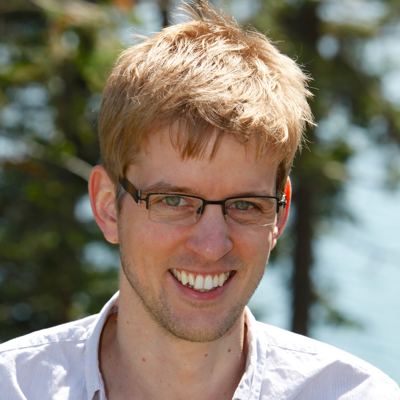
Christoph Aeppli, Ph.D., is a Senior Research Scientist at Bigelow Laboratory for Ocean Sciences. An environmental chemist, his research focuses on the fate and effects of organic contaminants in aquatic environments, including halogenated compounds such as PFAS. He led the analysis of PFAS samples for the collaborative Casco Bay study and studies how these chemicals move, persist, and impact aquatic ecosystems.
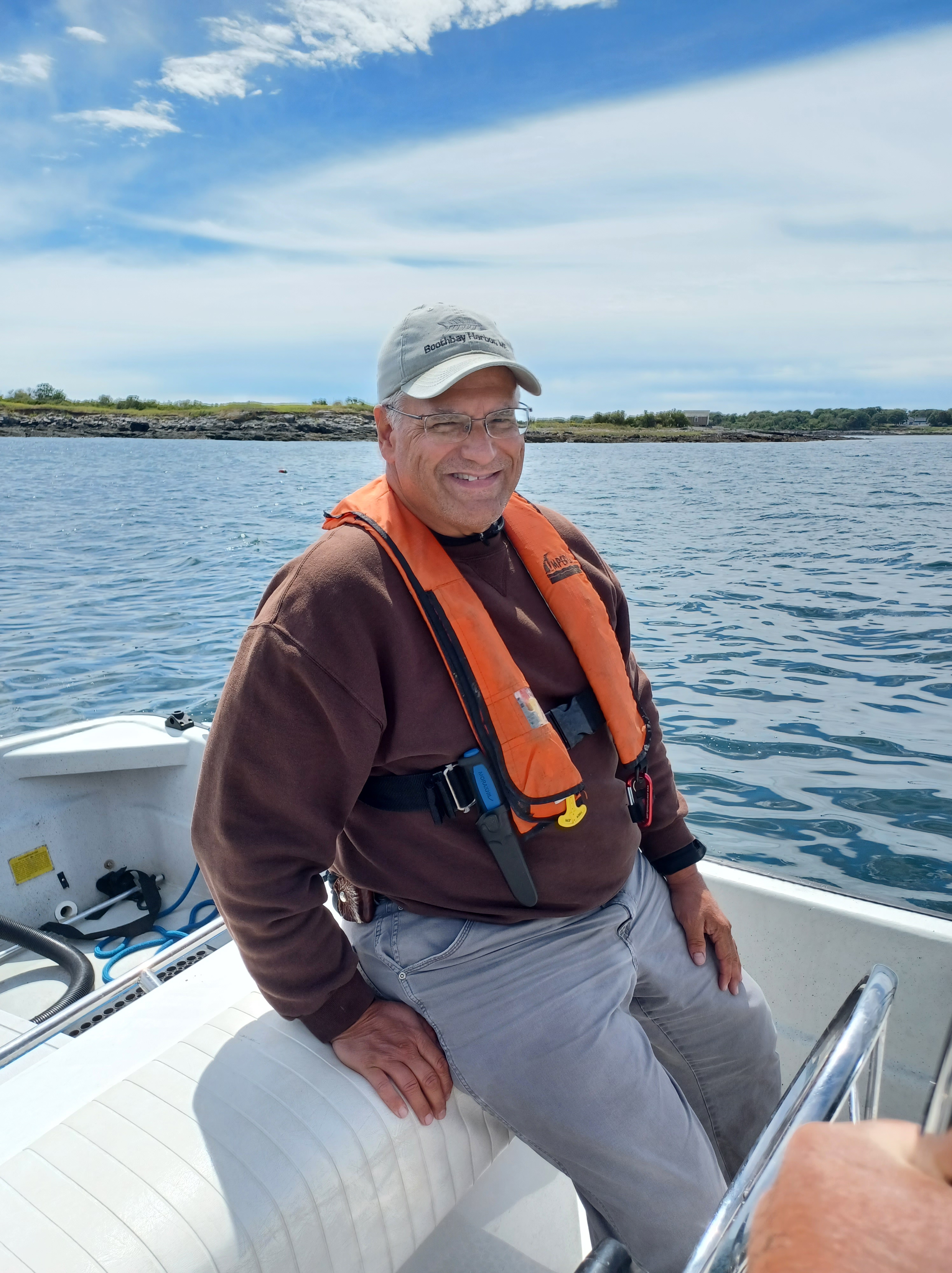
Jim Stahlnecker is a biologist in the Marine Unit within the Division of Environmental Assessment at the Maine Department of Environmental Protection. His work includes leading the marine side of the Surface Water Ambient Toxics (SWAT) monitoring program, studying a variety of contaminants, including PFAS, in Maine’s coastal waters and fisheries.