Search

Celebrating 10 Years with Ivy Frignoca, Our Lorax of Casco Bay

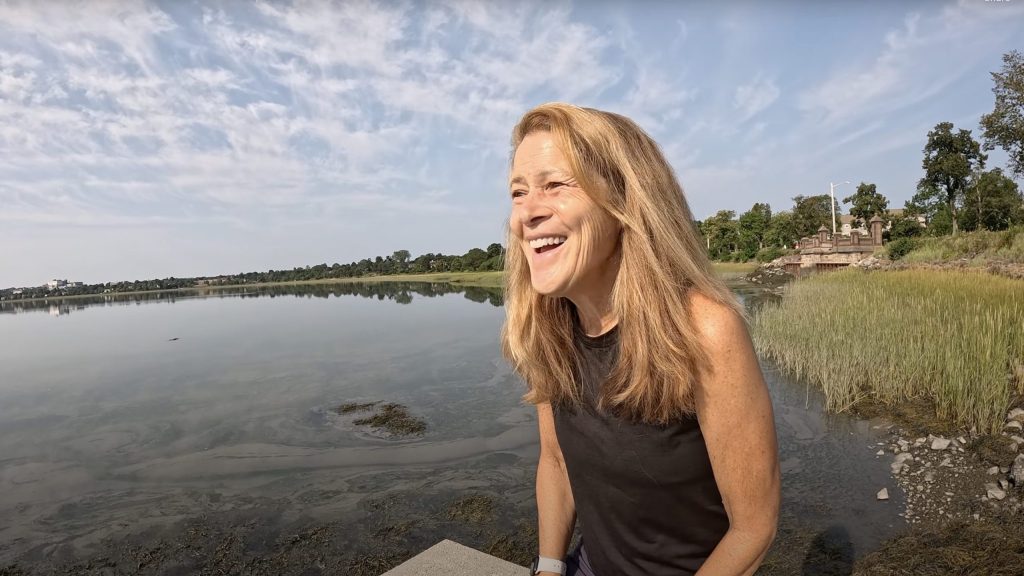
Ivy smiling. Water background.

By Meghan Vigeant


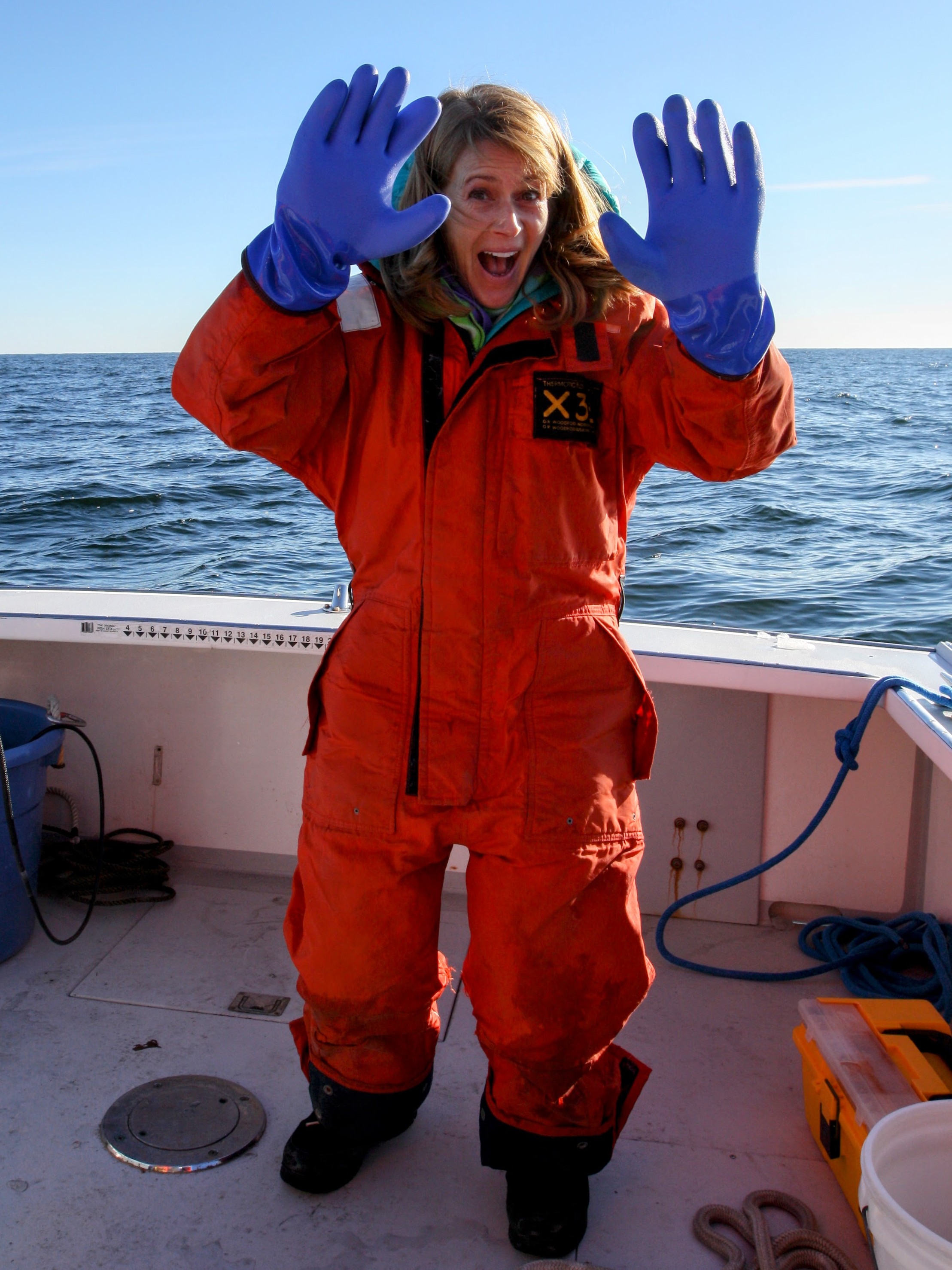
On a frigid day in January 2016, one of her first days on the job, Ivy Frignoca suited up on the deck of the Casco Baykeeper boat in a bright orange survival suit and a pair of blue rubber gloves. The gloves were comically enormous, way too big for Ivy’s hands. Being Casco Baykeeper is a big role, too. It spans hands-on scientific work, building relationships and listening to communities across the watershed, and shaping environmental policy to protect the Bay.

But from the very start, this big role fit Ivy perfectly.

Ivy in an orange survival suit, holding up her hands in huge blue gloves
Casco Baykeeper Ivy Frignoca suits up on one of her first days on the job, January 2016.

When she arrived at Friends of Casco Bay ten years ago, Ivy brought a lifelong connection to water and a clear sense of how she wanted to protect it. In college, she designed her major around the role she hoped to play—not as a scientist, but as someone who advocated alongside scientists to protect clean water. She taught at marine outdoor education centers and worked for the State of Vermont, supporting Lake Champlain’s water quality and helping people connect with the outdoors. Law school came next, sharpening her ability to advocate for water through policy and law. 

By the time she joined Friends of Casco Bay in 2016, Ivy had years of experience working at the intersection of science, policy, and people. Becoming the Casco Baykeeper merged Ivy’s personal passion with her aspiration to advocate for clean water.
"A waterkeeper is someone who views herself as part of the water. You’re connected to it, and you’re working to ensure it remains healthy and has a voice.”

Listening to the Water. Speaking for the Water.

As Friends of Casco Bay’s lead advocate, the Casco Baykeeper serves as the eyes, ears, and voice of the Bay. Ivy often describes her role as being a “Lorax for the water.”

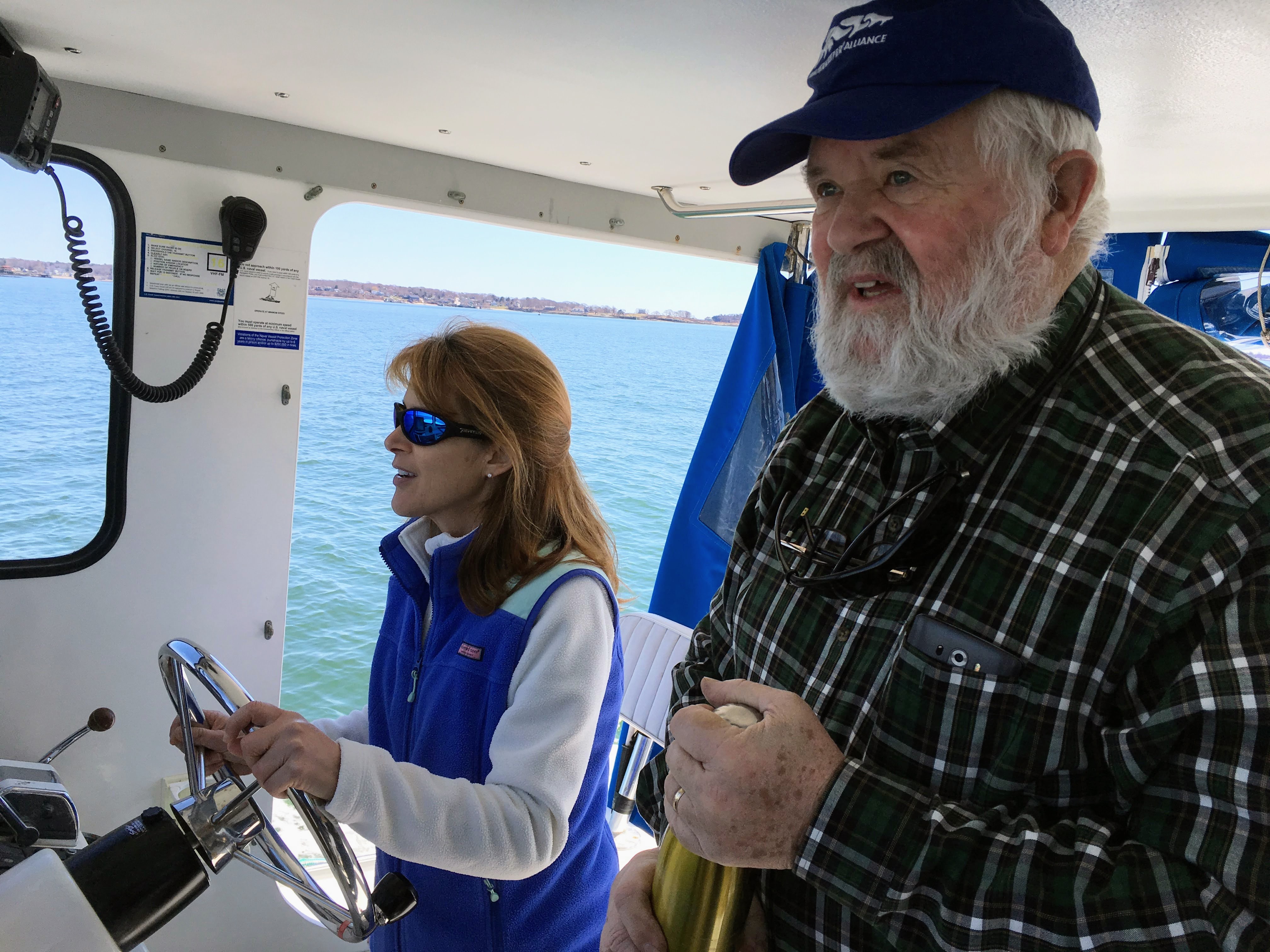
Ivy and Joe on the boat
Ivy Frignoca and Joe Payne aboard the Casco Baykeeper boat in 2016. Joe was the first Casco Baykeeper and a founding member of the Waterkeeper Alliance. He retired after 23 years of commitment to Casco Bay.

She can speak for the Bay because she is listening. “I approach my work not assuming that I have the answers,” Ivy says, “but to listen and learn from the Bay and from other people.” 

That listening happens everywhere: out on the water collecting data with scientists, and on shore talking with fishermen, harbor masters, wastewater operators, city planners, aquaculturists, and people who simply love the waters. Those conversations shape Ivy’s work with regulators, policymakers, and civic leaders. 

“At the core, a waterkeeper is someone who views herself as part of the water,” she says. “You’re connected to it, and you’re working to ensure it remains healthy and has a voice.” 

This year marks her 10th anniversary as Casco Baykeeper—an opportunity to reflect on progress and the work ahead. Executive Director Will Everitt puts it this way, “Ivy’s work has quietly reshaped how Casco Bay is protected, from stormwater and Clean Water Act permits to newer challenges like eelgrass loss, PFAS, and climate resilience.” What follows is not a list of accomplishments, but a closer look at how that work happens–through collaboration, persistence, and attention to the long game.
Reducing Nitrogen for a Healthy Bay

Soon after Ivy stepped into the role, Portland’s East End Wastewater Treatment Facility came up for a routine discharge permit renewal. Friends of Casco Bay’s monitoring data showed elevated nitrogen entering Casco Bay–alongside nuisance algal blooms and stressed eelgrass–an issue that needed addressing before their permit could be renewed.

Ivy worked with city staff and Portland Water District to find practical solutions. Through a series of operational changes, the treatment plant reduced its average daily nitrogen load by 70%. The algal blooms near the discharge disappeared, and eelgrass showed signs of rebounding.

It was an early test of Ivy’s approach—and a clear sign of what collaboration, persistence, and good data could deliver.

Climate Change and the Long View

Ivy has spent much of the past decade helping communities understand how climate change is affecting Casco Bay. From warming waters to ocean acidification, the Bay’s ecosystems are under pressure–and those pressures are only intensifying, making careful data and collaboration more important than ever.

Ivy’s role as Casco Baykeeper is often about helping ideas travel: identifying regulatory barriers, elevating shared concerns, and supporting policies that can strengthen the resilience of nearshore habitats over time. She has spent countless hours collecting data with Staff Scientist Mike Doan and listening closely to what scientists are learning about climate change and ocean acidification. Through the Maine Ocean and Coastal Acidification Collaborative, Maine’s Blue Carbon Network, and the Coastal and Marine Working Group of the Maine Climate Council, she works with others to make sure that science doesn’t stay siloed. She is working to translate science into actions that protect our coastal waters. 

An Eye on Underwater Meadows

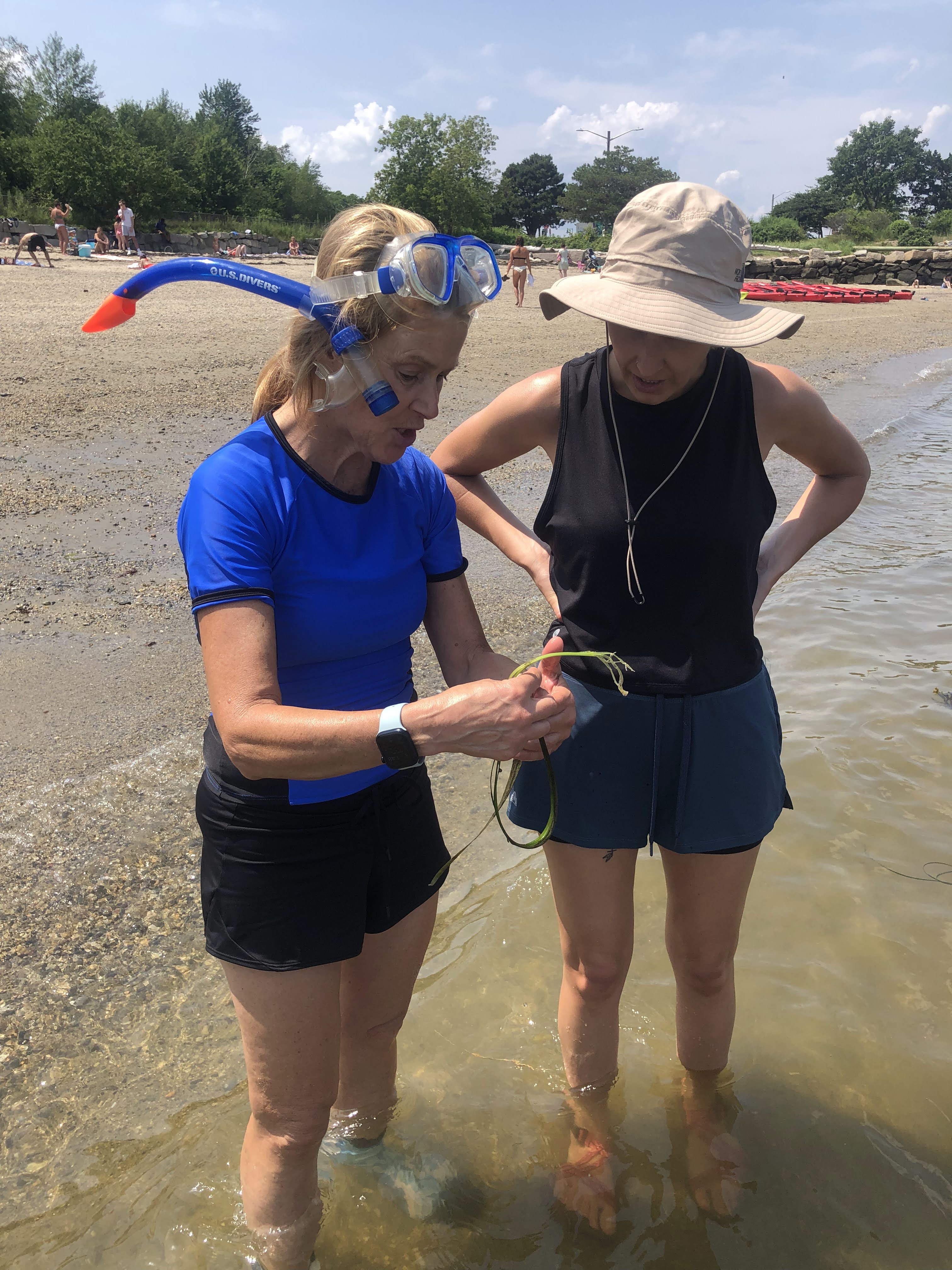
Ivy examines an eelgrass shoot with Science and Advocacy Associate Heather Kenyon at a seagrass seeding workshop hosted by Team Zostera (July 2023).

For Ivy, the vibrant green blades of eelgrass growing along Casco Bay’s coast conjure up images of ballerinas swaying with the waves. These underwater meadows provide critical habitat for fish and shellfish, stabilize sediments, and help clean the Bay.

But eelgrass habitats are in trouble. Between 2018 and 2022, more than 54% of Casco Bay’s eelgrass beds disappeared—and losses have continued since.

Ivy and others wondered: Is the decline driven by climate change—warmer waters and stronger storms? By green crab foraging? Or by high nutrient levels? Ivy and staff scientist Mike Doan teamed up with researchers across the region to study the causes and explore how these beds can be restored.

Ivy supported legislation to fund the regular mapping of eelgrass beds and salt marshes so changes like this don’t go unseen. Through her work with others on the Coastal and Marine Working Group, she helps keep these vital habitats visible in policy conversations.
The Slow, Steady Work of Tackling Stormwater Pollution

From her first year on staff, Ivy has focused on addressing stormwater pollution, one of the largest sources of pollution in the Bay. “Stormwater is the most thorny area of pollution to address,” Ivy says. “It affects the entire watershed, its streams, rivers, lakes, and all waters that flow into Casco Bay.” 

As communities grow and hard surfaces replace soil, rainwater that once soaked into the ground now sheets off roads, rooftops, and parking lots, carrying bacteria, nutrients, oil, and other pollutants into streams and the Bay. The pollution is widespread, largely invisible, and tied to how communities are built. Ivy believes the solution isn’t to stop development—it’s to rethink how communities grow and manage the landscape. Thoughtful choices, like keeping buffers along streams and adding features that filter runoff, can make a real difference.

There is no quick and easy solution. Ivy has focused on steady, lasting change: improving monitoring, strengthening permits, and encouraging development that preserves the natural flow and filtering of water. 

 “I’ve been working on stormwater pollution for over the last decade,” Ivy says, “and I will work on it for the remainder of my time as Casco Baykeeper.”

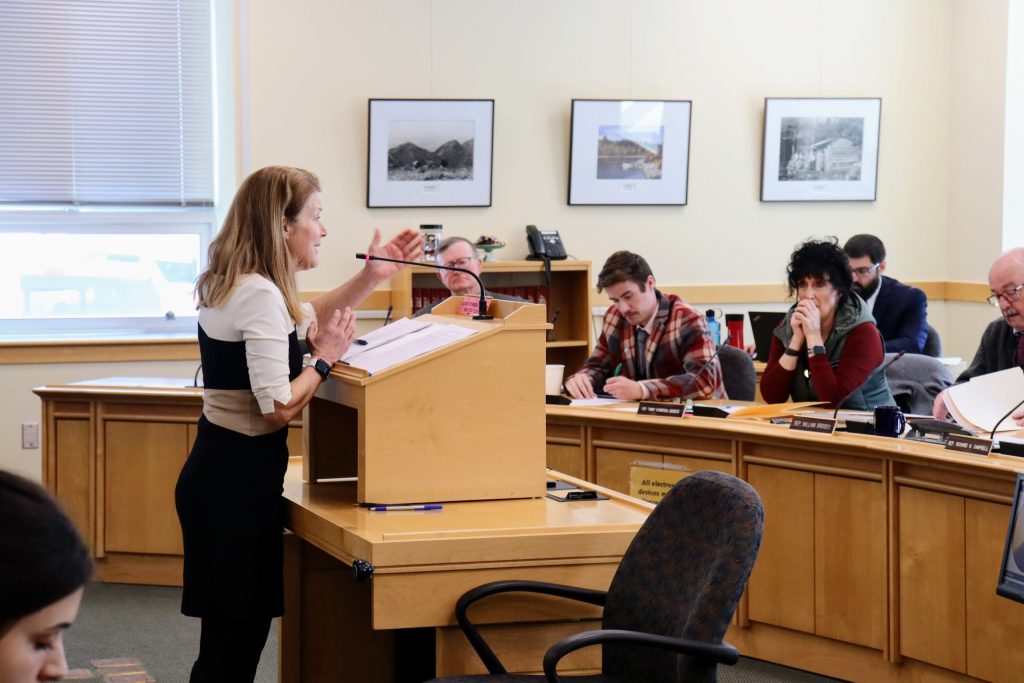
Ivy at a podium speaking to a committee
Ivy testifying on the Stormwater Resolve bill before the Environment and Resources Committee on March 3, 2025. Photo by Meghan Vigeant.

Emerging Contaminants. Emerging Concerns.

When Maine began testing farm fields and found high levels of PFAS linked to the spreading of wastewater sludge, it raised a new question for Ivy and our organization: If these chemicals were showing up in soils and groundwater, were they also making their way into rivers and Casco Bay? 

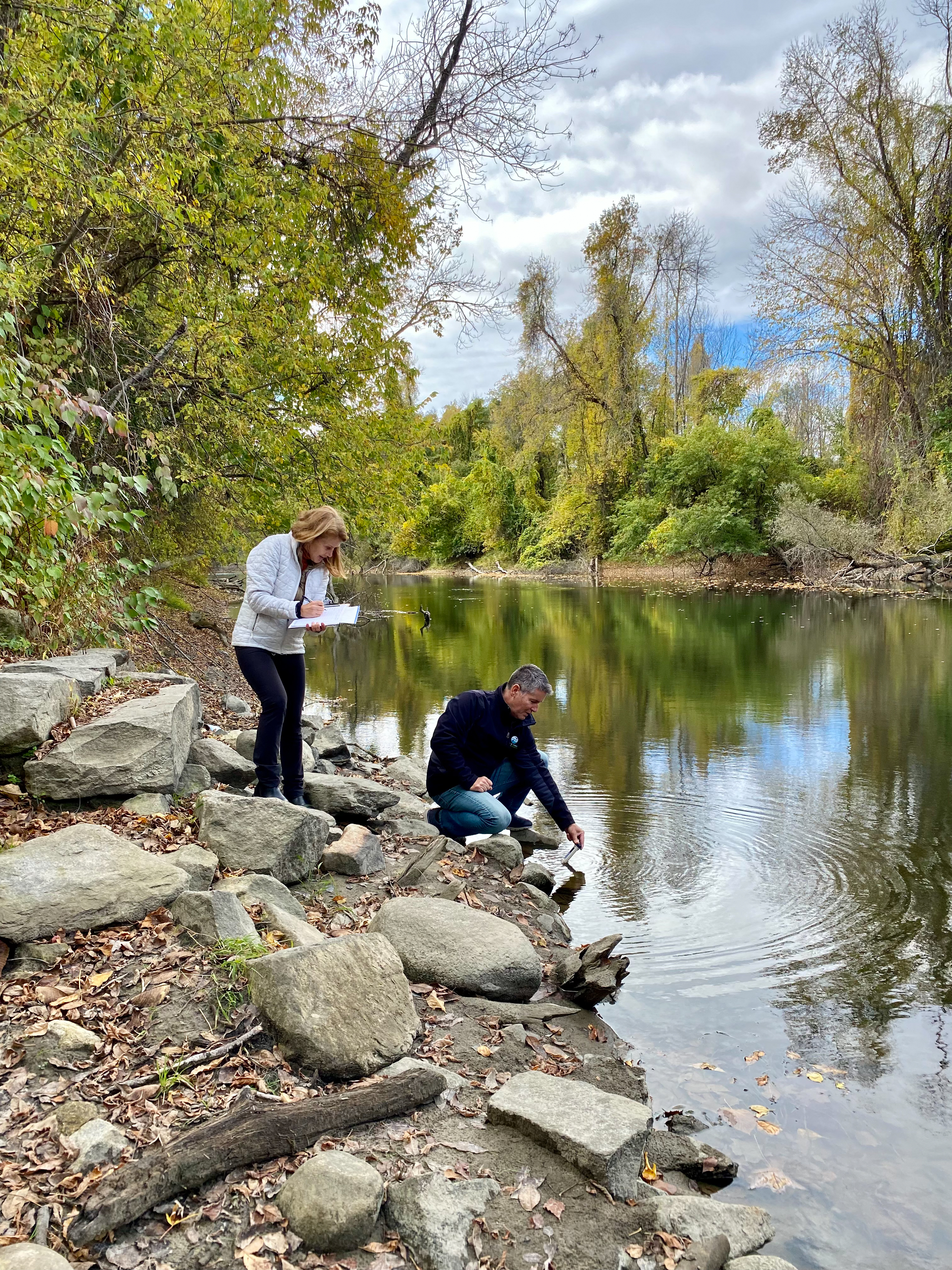
Ivy and Mike gather samples at the river
Ivy and Staff Scientist Mike Doan gathering samples from the Presumpscot River for PFAS testing, October 2024. Photo by Heather Kenyon.

PFAS—so-called “forever chemicals”—persist in the environment and can pose serious risks to human and animal health. To investigate, Ivy encouraged our partnership with Bigelow Laboratory for Ocean Sciences as we launched a first-of-its-kind study tracking PFAS in the lower watershed and Casco Bay. When firefighting foam spilled at the Brunswick Executive Airport in 2024, Ivy and the team quickly expanded their study to include impacted sites.

The results, now being analyzed, will help guide future monitoring and stronger protections for Casco Bay. This March, Ivy will host an online discussion on the findings at Coffee with the Casco Baykeeper: The PFAS Results Are In!, featuring scientists from Bigelow Laboratory and Maine Department of Environmental Protection.
A Decade In, and Looking Ahead

Across all of Ivy’s work runs a consistent thread: a commitment to evidence-based action. “We don’t go out looking to prove a conclusion,” Ivy says. “We let the data talk to us.” 

For Ivy, protecting Casco Bay has never been an abstract policy exercise. It’s about everyday life in Maine. “Clean water is not and should not be a political topic,” Ivy says. “Our livelihoods, recreation, and sustenance depend on clean, healthy water. It’s essential.” 

Ten years after pulling on those oversized gloves, Ivy still sees her role as one of service. “I feel entrusted to do the very best I can for our waters,” Ivy says. “And I take that to heart.”

Want to support the continued efforts of our Casco Baykeeper?

Consider becoming a member by donating or volunteering

If you are already a member, thank you.
Together all Friends make our efforts for clean water possible.