

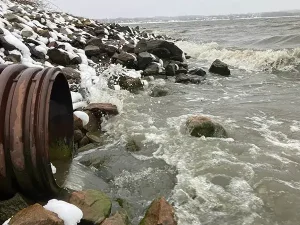
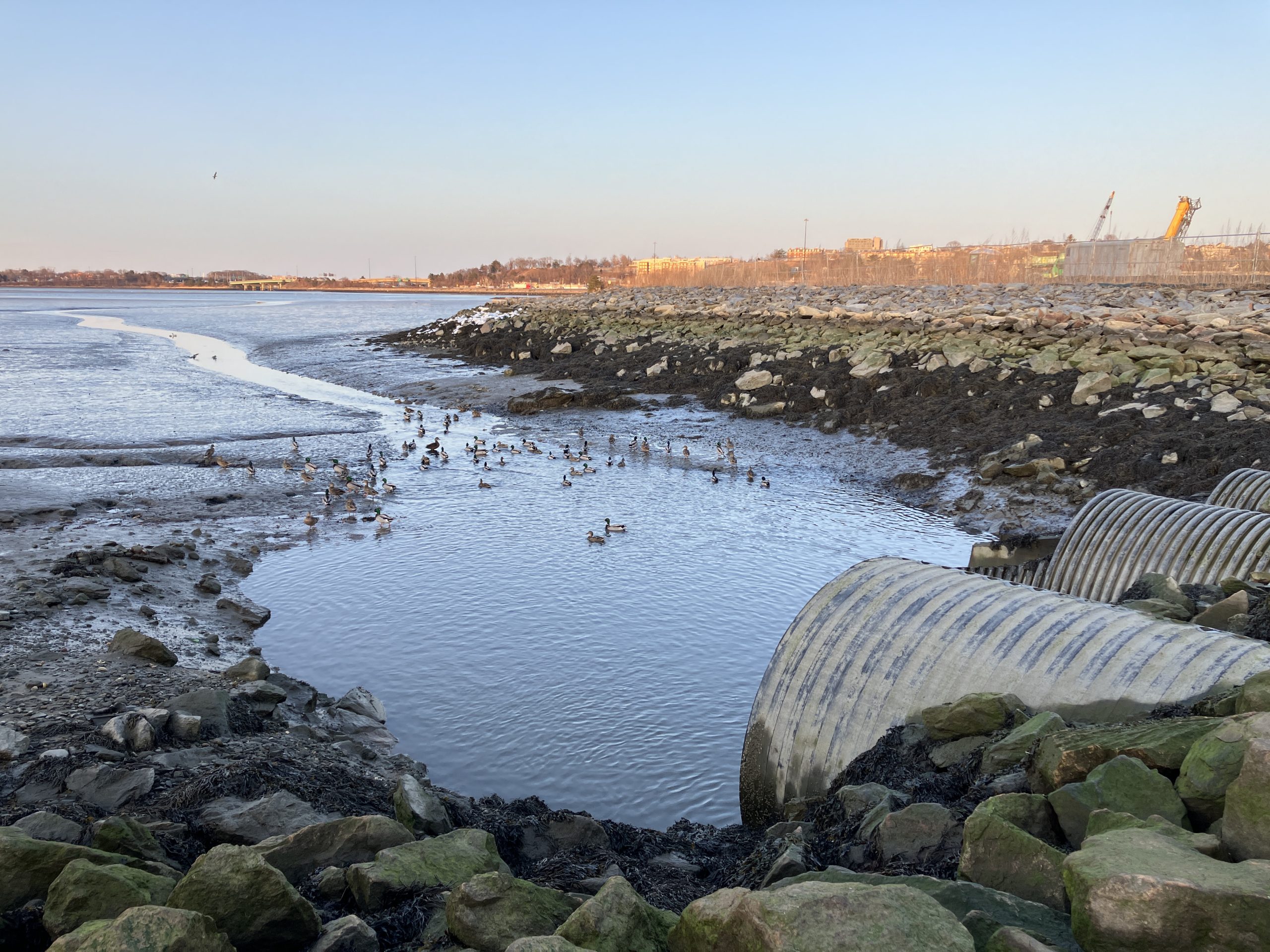
Rain and snowmelt wash oil, trash, bacteria, and other pollutants off roads, lawns, and sidewalks, and into waterways and the Bay. In some areas, heavy rains can even cause sewer systems to overflow. Water Reporters help us track stormwater issues like flowing drains and flooded outfalls so we can push for solutions.
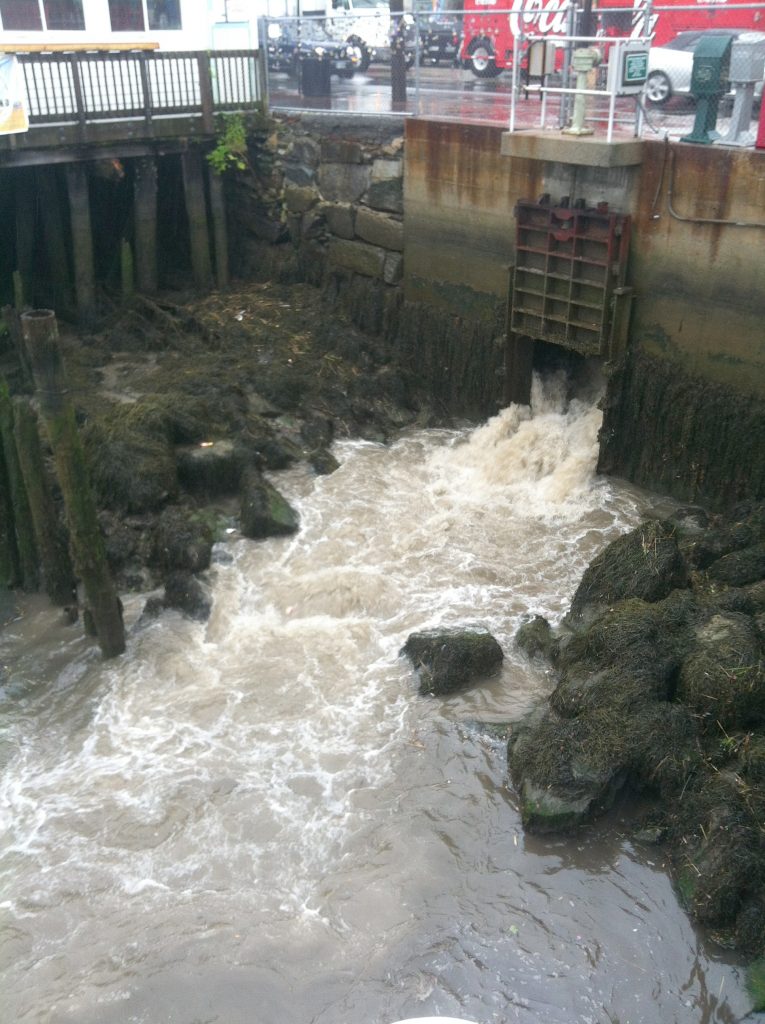
Stormwater—rain and snowmelt that runs off streets, rooftops, and other hard surfaces—can carry pollution such as bacteria, road salt, oil, trash, pesticides, fertilizers, and pet waste into our waters.
In some communities, heavy rains can overwhelm combined sewer systems, where stormwater and sewage share the same pipes. When these systems overflow, they can release untreated sewage into Casco Bay. Not all underground systems are combined, and many storm drains carry stormwater only—but even these discharges can deliver significant pollution.
While many municipalities are working to reduce combined sewer overflows and better manage stormwater, pollution from runoff remains a serious threat to marine life and public health. By documenting stormwater-related issues, Water Reporters help us understand where problems persist and advocate for cleaner water.



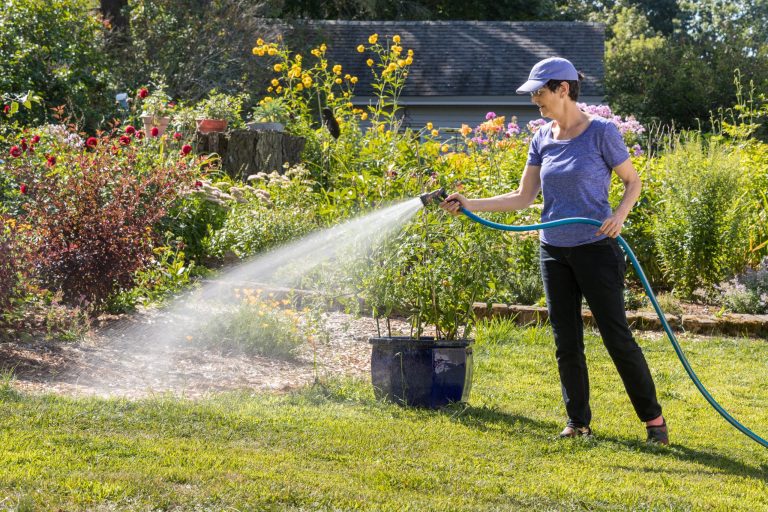
- Stop using fertilizers on your lawn or garden.
- Burn less oil, wood, and coal to reduce pollution from smokestacks.
- Keep your car tuned up to reduce pollution from tailpipes.
- Choose to walk, bike, bus, or carpool.
- Pick up pet waste.
- Support LID (low-impact development) measures and preserving land and waterways to naturally filter out stormwater pollutants.


Video: Running Around Back Cove’s Hidden Pollution Solution
Watch our video, a running tour of the hidden tanks under Back Cove keeping stormwater and sewage pollution out of Casco Bay.

How Stormwater Impacts Casco Bay’s Coldwater Community: A Story of Two Maine Mermaids
Two Maine Mermaids foster community through cold water dips, but stormwater pollution threatens these cherished moments.

Watch Coffee with the Casco Baykeeper: Stormy Times Call for Action
In our recent webinar, we explored how increasing rainfall and growing urbanization are intensifying the impact of toxic runoff on Maine’s waterways, beaches, and clam flats.

Portland is cleaning up the watershed with green infrastructure
Portland Public Works installed 32 rain gardens, also known as bioretention cells, at Sagamore Village to filter out pollutants from stormwater.