Working together to advance science and solutions for ocean acidification in the Gulf of Maine
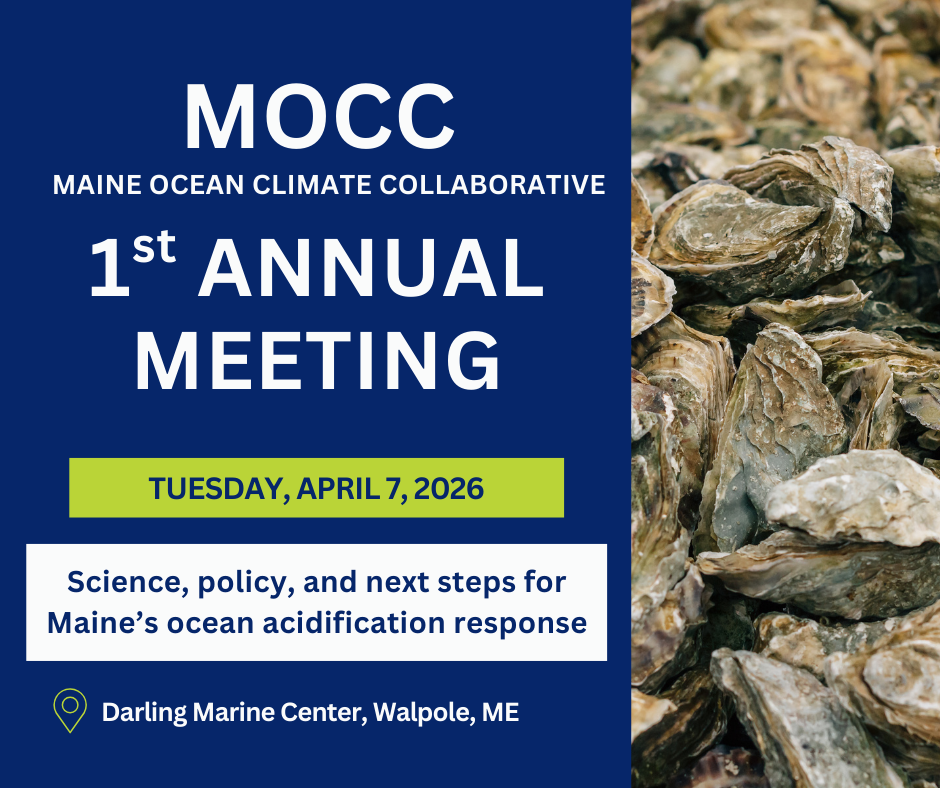
Please join the Maine Ocean Climate Collaborative (MOCC) for its annual meeting on April 7, 2026, at the Darling Marine Center in Walpole, Maine.
The meeting is intended for scientists, aquaculturists, shellfish managers, and policy-makers working on ocean acidification. The meeting will present targeted information to advance Maine’s actions to address OA, and will include ample time for questions and conversation. Together, we will strengthen connections across sectors and help ensure that Maine’s approach to ocean acidification is grounded in science, informed by experience, and ready for what lies ahead.
The morning session will focus on ocean acidification monitoring, impacts on marine species, updates from network members, and a preview of emerging work to develop a three-day OA forecast. The afternoon session will turn to policy—examining how other states are addressing OA, discussing approaches to OA criteria, and considering what comes next for MOCC.
In-person attendance is strongly encouraged. This meeting will help define the future of MOCC and establish a framework for its governance. If you are unable to attend in person and would like to join via Zoom, please email keeper@cascobay.org to request a link.
We are excited by the agenda and invite you to help chart the future of ocean acidification monitoring and response in Maine.
Event details:
Maine Ocean Climate Collaborative (MOCC) 1st Annual Meeting Date: April 7, 2026 Time: 9:00 a.m.–3:15 p.m. Location: Darling Marine Center: 193 Clarks Cove Road, Walpole, Maine 04573 This is an ADA-compliant venue with ample free parking. Free to attend. Lunch is provided.
Registration is limited to 60 people. Please register in advance to reserve your spot.
Registration
Agenda
Morning
9:00–9:30 a.m. Arrival and registration. Coffee and snacks.
9:30 a.m. NOAA Northeast OA Monitoring Priorities Austin Pugh
10:00 a.m. Science Panel
Emily Whitmore – OA effects on aquaculture
Brittany Jellison – OA impacts on lobster
Chris Hunt – OA forecasting
11:15 a.m. Break and networking.
11:30 a.m. Roundtable updates from MOCC partners (with optional OA lab tour)
12:30–1:30 p.m. Lunch provided
Afternoon (policy-focused)
1:30-2:00 p.m. Approaches to OA criteria in other states. (Speaker to be confirmed)
2:00-2:30 p.m. Governance Structure of OA collaborations in other States (Ivy Frignoca and Emma Daughtry)
2:45 p.m. The future of MOCC: next steps and governance
3:15 p.m. Adjourn and final networking
Additional Reading: Published Papers
A two-part report on monitoring acidification. Written by Dr. Chris Hunt of the University of New Hampshire’s Ocean Process Analysis Laboratory, Curtis Bohlen, Director of Casco Bay Estuary Partnership, Mike Doan, Friends of Casco Bay’s Staff Scientist, and Jeremy Miller of Wells National Estuarine Research Reserve, the report shares the results of their two-year study to identify affordable and reliable tools for monitoring nearshore ocean acidification.
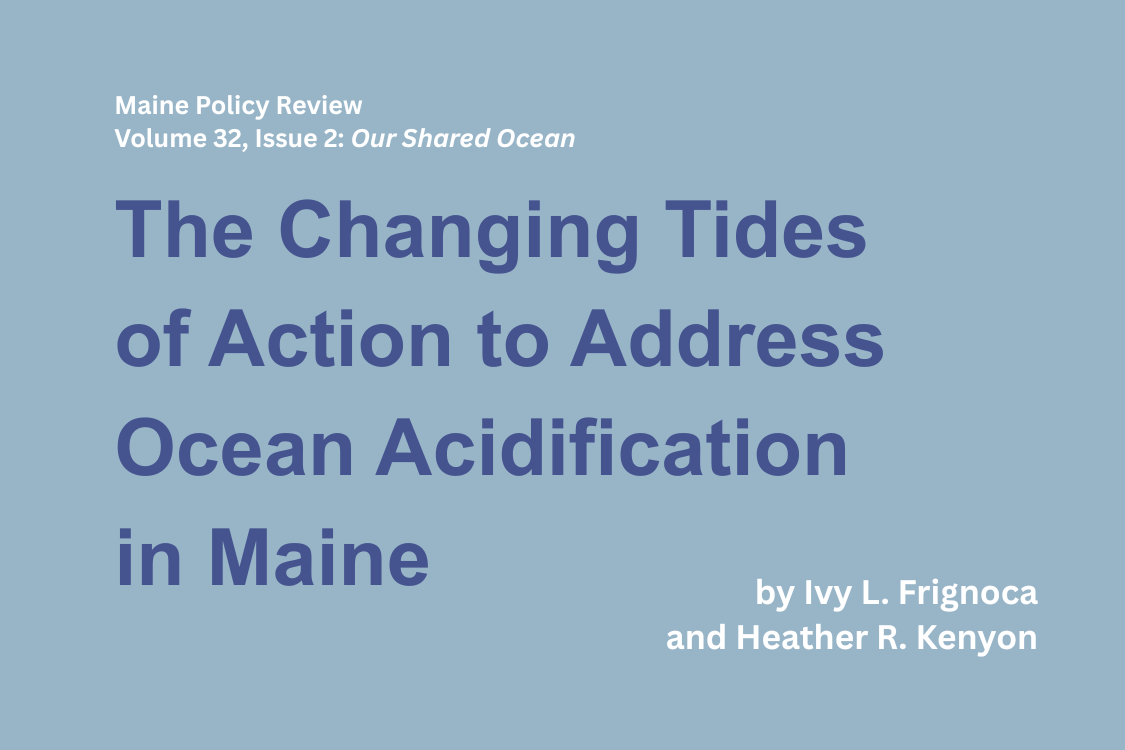
A policy paper by Ivy L. Frignoca and Heather R. Kenyon. This publication details Maine's response to ocean acidification, detailing the collaborative efforts of communities, policymakers, and scientists to address this environmental challenge.